- Home
- Jiu-Jitsu Dictionary: Master The Gentle Art
Jiu-Jitsu Dictionary: Master The Gentle Art
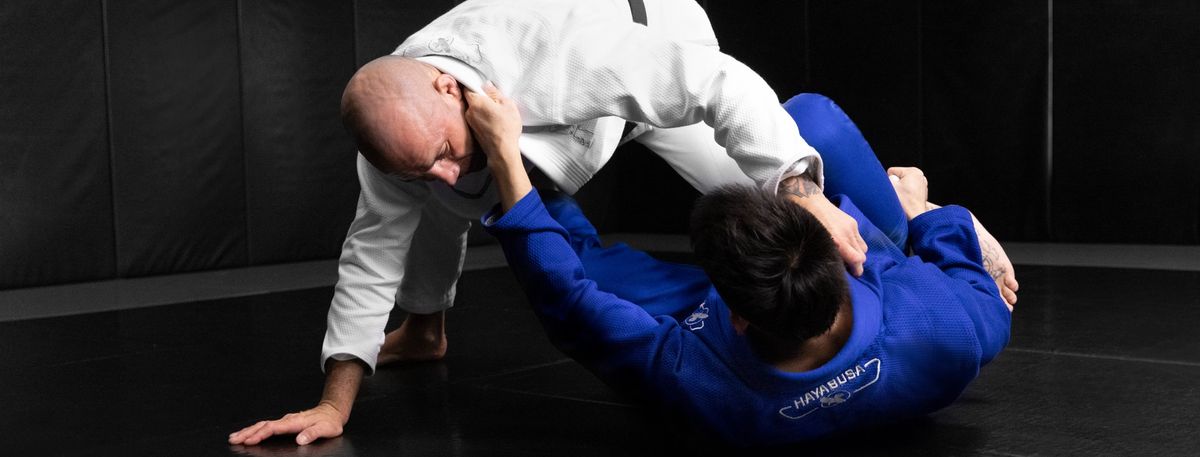
Jiu-Jitsu, known as the Gentle Art, focuses on ground fighting and submissions, emphasizing technique, leverage, and strategy. This dictionary, covering over 200 terms, is a complete guide to the language of Jiu-Jitsu, enhancing your understanding and appreciation of the art, whether you're experienced or new to the mat.
Fundamental Jiu-Jitsu Terms
- Academy: A place where Jiu-Jitsu is taught and practiced, often referred to as a gym or dojo.
- Armbar (Juji Gatame): A submission technique that hyperextends the elbow joint, typically performed by isolating and controlling the opponent’s arm.
- Back Control: A dominant position where the practitioner is behind the opponent, often with hooks (legs) in, controlling the opponent’s upper body.
- Base: The ability to maintain balance and stability while in various positions, preventing the opponent from sweeping or taking control.
- Belt System: The ranking system in Jiu-Jitsu, typically consisting of white, blue, purple, brown, and black belts, with various stripes denoting progress within each belt.
- Berimbolo: A modern Jiu-Jitsu technique used to invert and transition from guard to back control, often associated with the De La Riva guard.
- Brazilian Jiu-Jitsu (BJJ): A martial art and combat sport focused on ground fighting and submission holds, derived from traditional Japanese Jiu-Jitsu and Judo.
- Breakfall (Ukemi): A technique used to safely fall or absorb impact, minimizing injury during takedowns or throws.
- Bridge (Upa): A movement used to create space or escape from bottom positions, involving arching the back and lifting the hips off the ground.
- Butterfly Guard: A seated guard position where the practitioner uses their legs, hooked inside the opponent’s thighs, to control and sweep them.
- Choke (Shime Waza): A submission technique that restricts airflow or blood flow, leading to unconsciousness if not defended.
- Closed Guard: A guard position where the practitioner’s legs are wrapped around the opponent’s waist, controlling their posture and movement.
- Collar Tie: A grip on the opponent’s collar, often used in stand-up grappling to control their posture and initiate takedowns.
- Combat Base: A transitional position where one knee is on the ground and the other foot is planted, providing stability for passing guard or defending against attacks.
- Cross Collar Choke: A choke performed from guard or mount by gripping the opponent’s collar and crossing the hands to apply pressure to the carotid arteries.
- De La Riva Guard: An open guard position where one leg hooks around the outside of the opponent’s leg, controlling their movement and setting up sweeps.
- Double Leg Takedown: A fundamental wrestling takedown where the practitioner shoots in to grab both of the opponent’s legs, driving them to the ground.
- Escapes: Techniques used to get out of disadvantageous positions, such as mount, side control, or back control.
- Gi: The traditional uniform worn in Brazilian Jiu-Jitsu, consisting of a jacket, pants, and belt.
- Guard: A position where the practitioner is on their back but uses their legs and hips to control and attack the opponent.
- Guard Pass: The act of moving from inside the opponent’s guard to a more dominant position, such as side control or mount.
- Half Guard: A guard position where the practitioner has one leg trapped between the opponent’s legs while using the other leg to control their posture.
- Hooks: The practitioner’s legs inserted inside or around the opponent’s legs, commonly used in back control or guard positions.
- Brown Belt: The advanced rank in Jiu-Jitsu, indicating a high level of technical proficiency and the ability to teach and mentor others.
- Black Belt: The expert rank in Jiu-Jitsu, representing mastery of the art and the ability to contribute to the Jiu-Jitsu community as an instructor and competitor.
- Red Belt: The highest and most prestigious rank in Jiu-Jitsu, awarded to practitioners who have dedicated their lives to the art.
- Coral Belt: A rank between black and red belt, typically awarded to practitioners with decades of experience and contributions to the art.
- Stripe: A small piece of tape added to the belt to indicate progress within that belt level.
- Instructor (Professor): A high-ranking practitioner responsible for teaching and guiding students in their Jiu-Jitsu journey.
- Master: A title given to practitioners who have reached the highest levels of expertise and experience in Jiu-Jitsu.
Jiu-Jitsu Training & Concepts
- Belt Promotion: The process of advancing to a higher belt rank, typically based on skill, time, and performance in Jiu-Jitsu.
- Chain Attacks: A sequence of connected techniques or submissions that flow from one to another to overwhelm an opponent.
- Conditioning: Physical training focused on endurance, strength, flexibility, and durability for Jiu-Jitsu performance.
- Conceptual Learning: An approach to Jiu-Jitsu that emphasizes understanding principles and concepts rather than memorizing individual techniques.
- Counter: A technique used to neutralize or reverse an opponent’s attack, often turning defense into offense.
- Cross Training: Training in other martial arts or disciplines to improve overall grappling ability and athleticism.
- Drilling: Repetitive practice of techniques to build muscle memory and improve execution.
- Flow Roll: A light, cooperative form of sparring where practitioners focus on movement, transitions, and timing rather than winning.
- Grip Fighting: The battle for dominant grips on the Gi or body, often determining control and success in exchanges.
- Gym Etiquette: The expected behavior and customs within a Jiu-Jitsu academy, including respect for instructors and training partners.
- Incremental Improvement: The philosophy of making small, consistent improvements over time to develop skill and mastery.
- Injury Prevention: Practices such as proper warm-ups, stretching, and tapping early to reduce the risk of injury.
- Learning Curve: The pace at which a practitioner progresses, which can vary depending on experience, training frequency, and mindset.
- Mat Time: The amount of time spent training on the mats, a critical factor in skill development.
- Positional Sparring: Training that begins in a specific position to focus on improving skills in that scenario.
- Pressure: The controlled application of body weight and positioning to limit an opponent’s movement and create openings.
- Shark Tank: A training drill where one practitioner rolls continuously with fresh partners to test endurance and mental toughness.
- Strategy: The overall plan a practitioner uses during training or competition based on strengths, weaknesses, and objectives.
- Submission Chain: A connected series of submission attempts that flow together when an opponent defends.
- Tapping: The act of signaling submission by tapping the mat or opponent to stop a technique.
- Transition: The movement from one position to another during a roll, often creating opportunities for control or attack.
- Visualization: Mental rehearsal of techniques and scenarios to improve performance and confidence.
Jiu-Jitsu Organizations & Competitions
- ADCC (Abu Dhabi Combat Club): A prestigious grappling competition that features no-Gi matches and is considered the pinnacle of submission grappling.
- CBJJ (Confederação Brasileira de Jiu-Jitsu): The Brazilian Jiu-Jitsu Confederation, one of the leading organizations for Jiu-Jitsu in Brazil.
- IBJJF (International Brazilian Jiu-Jitsu Federation): The primary organization governing Brazilian Jiu-Jitsu competitions worldwide, organizing major events like the World Championship.
- JJIF (Ju-Jitsu International Federation): The global organization for traditional Jiu-Jitsu, promoting the sport in its various forms and disciplines.
- JJFJ (Japanese Jiu-Jitsu Federation): The organization responsible for promoting and preserving traditional Japanese Jiu-Jitsu.
- Pan Jiu-Jitsu Championship: One of the largest and most prestigious Jiu-Jitsu tournaments, organized by the IBJJF.
- World Jiu-Jitsu Championship (Mundials): The premier annual Jiu-Jitsu competition, attracting the best practitioners from around the globe.
- US Grappling: An organization that hosts Jiu-Jitsu and grappling tournaments across the United States, catering to all skill levels.
- NAGA (North American Grappling Association): A popular organization that hosts grappling tournaments, including both Gi and No-Gi divisions.
Slang & Expressions
- Break Their Posture: An instruction to disrupt an opponent’s balance and alignment, making them easier to control or submit.
- Catch and Release: A training approach where a submission is secured and released before full pressure is applied, allowing continued practice without injury.
- Flow: A state of smooth, continuous movement during a roll where techniques transition naturally without force.
- Gassing Out: Losing stamina or energy during training or competition, leading to reduced performance.
- Get the Tap: A phrase encouraging the practitioner to secure a submission and force the opponent to submit.
- Grind: The consistent hard work and dedication required to improve in Jiu-Jitsu.
- Leg Locker: A practitioner who specializes in leg lock attacks such as heel hooks, knee bars, and ankle locks.
- Mat Rat: A highly dedicated practitioner who spends a significant amount of time training on the mats.
- Muscle Through: Relying on strength rather than technique to complete a move, often discouraged in Jiu-Jitsu.
- Play Your Game: Advice to stick to techniques and positions that suit one’s strengths.
- Positional Dominance: A strategy focused on maintaining superior positions rather than rushing for submissions.
- Pressure Game: A style of Jiu-Jitsu that emphasizes constant pressure to control and wear down an opponent.
- Scramble: A fast-paced exchange where both practitioners rapidly transition between positions.
- Shark Tank: A drill where one practitioner continuously rolls with fresh partners to test endurance and mental toughness.
- Smash Pass: A guard passing approach that uses pressure and weight to break through an opponent’s guard.
- Stay Tight: A coaching cue reminding practitioners to keep movements compact and controlled to limit escapes.
- Tap Early, Tap Often: A phrase promoting safety and longevity by encouraging early submission in training.
- Technical Roll: A smooth rolling movement used to escape positions or transition during scrambles.
- Top Game: A practitioner’s preferred strategies and techniques when fighting from top positions.
- Train Like a Black Belt: A motivational phrase encouraging discipline, focus, and consistency regardless of rank.
- Turtle Up: Entering the turtle position defensively to protect against guard passes or submissions.
- Use Your Hips: A common coaching reminder emphasizing hip movement for effective technique execution.
- White Belt Spaz: A humorous term describing uncontrolled, frantic movement often seen in beginners.
- Work the Pass: Encouragement to focus on passing the opponent’s guard methodically.
- Wrestle Up: A tactic where a practitioner attempts to stand up from guard to initiate takedowns.
- Oss: A term used in Brazilian Jiu-Jitsu as a greeting or sign of respect, expressing commitment and perseverance.
Jiu-Jitsu Concepts & Philosophies
- Gentle Art: The literal meaning of Jiu-Jitsu, emphasizing technique, leverage, and efficiency over brute strength.
- Cerebral Approach: A mindset focused on analysis, timing, and problem-solving rather than relying on physical attributes.
- Conservation of Energy: The principle of using minimal effort to achieve maximum results during movement and technique execution.
- Embrace the Grind: The philosophy of accepting the long, challenging journey of training and improvement.
- Flow State: A mental state where movements feel instinctive and effortless during rolling or competition.
- Human Chess: A metaphor describing Jiu-Jitsu as a strategic game where each move has counters and consequences.
- Jiu-Jitsu Lifestyle: Living according to the values learned on the mat, including discipline, humility, and continuous learning.
- Learning Through Failure: The belief that mistakes are essential tools for growth and technical development.
- Leverage Over Strength: A core principle emphasizing mechanical advantage instead of physical power.
- Martial Arts Philosophy: The broader values of respect, perseverance, humility, and self-improvement found in martial arts.
- No Ego: The practice of setting pride aside to learn openly and improve through honest effort.
- Patient Aggression: Balancing assertiveness with control and composure while pursuing dominant positions or submissions.
- Progress Over Perfection: Focusing on consistent improvement rather than flawless execution.
- Respect the Mat: Honoring the training space, instructors, and training partners through proper behavior and care.
- Rolling as Learning: Viewing every roll as an opportunity to gain insight and improve skills.
- Survival First: Prioritizing defense and safety before attacking when in disadvantageous positions.
- Tap as a Tool: Understanding that tapping is a learning mechanism, not a failure, and prevents injury.
- Technique Over Strength: Reinforcing that proper mechanics outperform raw power.
- The Path to Black Belt: The long-term journey of technical, mental, and personal development in Jiu-Jitsu.
- Use What Works: Adapting techniques to individual body types and strengths rather than rigidly following tradition.
- Warrior Spirit: The resilience and determination that drives practitioners to persist through adversity.